Mobile Home Insurance: What a Manufactured Home Policy Covers
How manufactured home insurance actually works, what lenders and parks require, why flood is always separate, and how to keep the premium down without shrinking coverage.
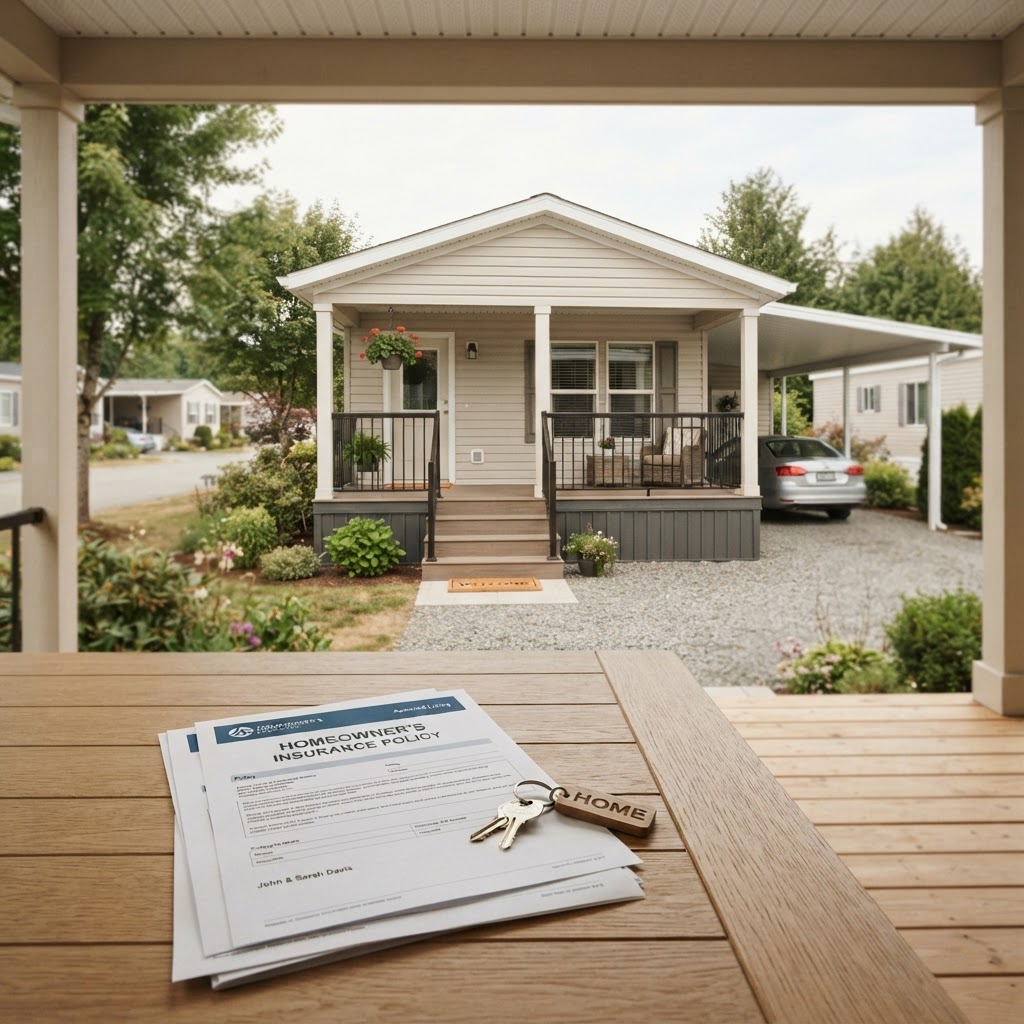
A manufactured home policy is not a homeowners policy with a different label. Insurers write mobile and manufactured homes on their own forms, most commonly an HO-7, because the home is often titled as personal property and sits on land someone else owns. Understanding what that form covers, and what your lender and park each require, prevents the two most expensive surprises in this segment: a claim that pays far less than expected, and a policy that does not satisfy the park at all.
This guide covers coverage line by line, the requirements that come from lenders and parks, what drives the premium, and the details that decide whether a claim is paid.
Quick answer: a manufactured home policy covers the structure, your belongings, liability, and temporary housing, usually on an actual cash value or replacement cost basis. It does not cover flood, the land, or the park's property, and your lender and park may each require specific coverage and named parties.
Why a Manufactured Home Policy Is Different
Three things separate these homes from site-built houses.
The home may be personal property. If you lease the lot, the home is typically titled rather than deeded, and insurers underwrite it accordingly. Some carriers will not write homes on leased land at all.
The land is not yours. You insure the home and your liability, not the lot, the roads, or the park's buildings.
Construction is different. Steel framing, panelized walls, tie-downs, and a transportation history all affect risk. Age matters more too: older homes are frequently limited to actual cash value coverage.
What the Policy Covers
Dwelling. The home itself, including built-in features. This is the number your lender cares about most, and it should reflect what it would cost to repair or replace the structure, not the purchase price.
Attached and other structures. Skirting, steps, decks, carports, awnings, and detached sheds, usually at a lower sublimit than the dwelling.
Personal property. Furniture, electronics, clothing, and appliances. Replacement cost coverage pays for new items; actual cash value pays depreciated value, which can be a small fraction of what replacement costs.
Loss of use. Hotel or rental costs if the home is uninhabitable after a covered loss, for a stated time limit.
Personal liability and medical payments. Protects you if someone is injured on your property or you damage someone else's property. Park requirements usually focus here.
What It Does Not Cover
Flood, including rising water and storm surge, is excluded from standard policies and requires a separate flood policy, whether through the National Flood Insurance Program or a private carrier. Earth movement, wear and tear, neglect, insect and rodent damage, mold beyond limited sublimits, ordinance or law upgrades, and business use are also commonly excluded or restricted. Vacancy is another one: most policies reduce or stop coverage when a home sits unoccupied beyond a set number of days, so tell your insurer if the home will be empty.
What Your Lender and Your Park Require
Your lender will want dwelling coverage that satisfies the loan terms, the lender named as mortgagee or loss payee, and proof of insurance before funding.
The park usually wants a certificate of insurance showing liability coverage at a minimum limit, the park named as an additional insured, and confirmation that the home is insured as a manufactured home. Some parks set the liability minimum well above what a typical policy carries by default, so read the lease and confirm the numbers before you bind a policy. Buying the cheapest online quote and discovering the limits do not satisfy the park is a common and entirely avoidable closing delay.
Replacement Cost, Actual Cash Value, and Older Homes
Replacement cost coverage pays to rebuild or replace with similar materials. Actual cash value pays replacement cost minus depreciation, so a twenty-year-old roof may pay very little.
Homes built before 1976, homes in poor condition, and homes with older roofs are often restricted to actual cash value. If that is your situation, raising the dwelling limit does not change the valuation method; the form does. Ask directly which basis the quote uses, and get it in writing.
What Drives the Premium
Coverage amount and valuation basis, deductible, home age and value, roof age and material, construction and tie-downs, location and exposure to wind, hail, wildfire, or freeze, claims history, and the credit-based insurance score used in most states. States with heavy catastrophe exposure cost more, and coastal or wildfire-adjacent areas can be significantly higher.
A realistic expectation: modest policies on lower-value homes can run in the hundreds per year, while higher-value homes, coastal exposure, or claims history can push it well into four figures. Compare three quotes on identical limits rather than comparing headline prices.
How to Lower the Premium
- Raise the deductible to a level you could actually pay after a loss.
- Bundle the home policy with auto or another policy for a multi-policy discount.
- Confirm the dwelling limit is accurate; over-insuring raises premiums without benefit.
- Ask about discounts for age of the home, monitoring, or community features.
- Shop at renewal rather than only at purchase, and get quotes from carriers that specialize in manufactured housing.
- Address the roof and any visible deterioration, which underwriters review closely.
Anchoring, Installation, and Claims
Insurers increasingly ask for evidence of proper installation: tie-downs, anchors, and in some states a foundation or installation certification. Keep the HUD certification labels and data plate documentation, the installation certificate, and any engineering report with your policy paperwork. At claim time these documents speed approval and can prevent a denial based on installation.
Moving, Vacant, and Rented Homes
If you buy a home and move it, you need coverage that follows the home in transit and during setup; standard policies do not cover a home being transported. If the home will sit empty during a move or a sale, ask for a vacancy endorsement. If you rent the home out, tell the carrier; a landlord exposure is underwritten differently from an owner-occupied one, and an undisclosed rental can void a claim.
Filing a Claim Without Losing Money
Document the home before a loss with dated photos and a video walkthrough, including serial numbers and receipts for major items. When damage occurs, stop further damage first, meaning tarp, shut off water, and move belongings, then report the claim promptly. Keep every receipt for temporary repairs and hotel stays. Do not authorize permanent repairs before the adjuster inspects, and get the settlement breakdown in writing so you can see how depreciation was applied.
Mobile Home Insurance FAQ
Is mobile home insurance more expensive than homeowners insurance?
Often slightly more per dollar of coverage, because these homes are frequently insured as personal property and carry installation and age considerations. The gap varies widely by state and carrier.
Do I need separate flood insurance?
Yes. Flood is excluded from standard policies. If the home is in a flood zone or your lender requires it, buy a separate flood policy.
Will the park accept my policy?
Only if it meets the lease requirements, usually liability limits with the park named as additional insured. Send the certificate to the park before closing.
Does the policy cover the land?
No. The land is not yours to insure. You insure the home, your belongings, and your liability.
What if my home is older than 1976?
Homes built before the HUD code took effect on June 15, 1976 are difficult or impossible to insure with standard carriers. Specialty policies exist, but expect limited coverage and higher cost.
Can I insure a home I am still making payments on?
Yes, and you must. The lender requires it and will usually be named on the policy.
Next Steps
If you are buying, confirm the park's insurance requirements before you bind coverage, and read our guides to chattel loans for a mobile home and financing a home in a park. Then get pre-approved so insurance and financing are moving at the same time, and review park land leases for the rules that affect both. If the home is on piers or the carrier asks about anchoring, start with foundation and tie-down requirements.
This article is educational and is not insurance advice. Coverage, exclusions, and requirements vary by carrier, state, and park.
Related Topics