Chattel Loan for a Mobile Home: What It Is and How to Qualify
A chattel loan finances the mobile home only, not the land under it. See how qualification, down payments, credit, park approval, and closing timelines really work.
A chattel loan is a mobile home loan secured by the home itself rather than the land under it. It is the standard way to finance a manufactured home in a mobile home park or on leased land, where you own the structure and pay rent for the space it sits on.
That single difference changes almost everything else: how the loan is titled, what lenders underwrite, how long closing takes, and which costs come with ownership. This guide walks through each of those pieces in the order they affect a real purchase, so you can tell early whether a chattel loan fits your situation or whether a land-home mortgage is the better fit.
Quick answer: a chattel loan finances personal property, meaning the mobile home only. The land stays with the park or community, you sign a space lease, and the lender records a lien on the home's title instead of recording a mortgage against real estate.
What a Chattel Loan Actually Covers
Chattel is an old legal term for personal property, anything you own that is not land or a building attached to land. A mobile home in a park is usually treated as personal property even though it looks and lives like a house, because the ground beneath it belongs to someone else.
In practical terms, a chattel loan covers:
- The manufactured or mobile home itself, including a singlewide, doublewide, or triplewide
- Permanent or temporary installation on a leased lot, when the program allows it
- Manufactured homes on rented land outside a formal park, such as a private lot lease
- Used homes, subject to program age and condition rules
It does not cover the land, the space rent, moving the home, or site setup. Those are separate costs, and lenders treat them separately too. If you are buying a home and the land it sits on together, you are looking at a land-home loan instead, which is underwritten more like a traditional mortgage.
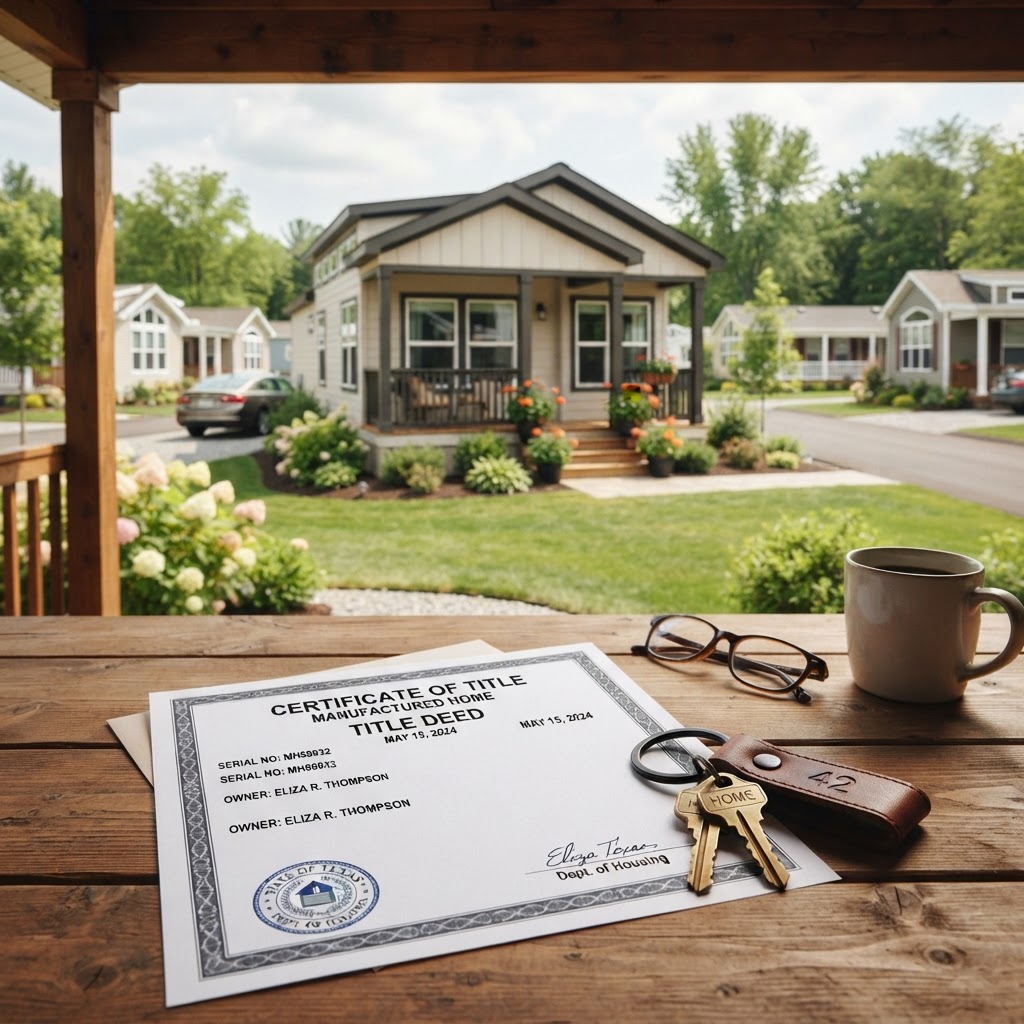
Because the collateral is a titled asset, the paperwork mirrors vehicle titling in several states. You will typically see a certificate of title or a statement of ownership, a lienholder listed on that document, and a lien release required from the seller's current lender before your loan can fund.
Chattel Loan or Land-Home Loan? Match the Loan to the Purchase
Most financing mistakes start here, not at the rate sheet. Match the loan to what you are actually buying.
- Buying a home already in a park, leasing the lot: chattel loan.
- Buying a home and the land together: land-home loan or manufactured home mortgage.
- Already own the land and want to place a home on it: often a chattel loan first, then a refinance into a land-home loan once the home is permanently affixed and converted to real property.
- Buying into a resident-owned community or co-op: the home is usually financed with a chattel loan while the community share is handled separately.
- Seller financing or a lease-option on an older home: not a chattel loan, but common when the home does not fit standard program guidelines.
If a seller or park tells you the home "comes with the land" but the lot rent is still being paid monthly, that is a red flag worth resolving before you apply. The title and the lease will tell you the truth.
How the Monthly Payment Is Built
A chattel payment is one line item in a housing budget that has several. Budget for all of them before you fall in love with a home.
- Loan principal and interest
- Monthly space rent or lot rent paid to the park
- Hazard or homeowners insurance written for a manufactured home
- Property taxes or annual registration fees, depending on how the home is titled in your state
- Utilities, and any park pass-through charges
- HOA or community fees, where they exist
Lot rent matters to underwriting, not just to your budget. Lenders count it in your debt-to-income ratio, so a low loan payment on paper can still fail qualification if the space rent is high. As an illustration only, a 70,000 dollar chattel loan at 9 percent over 20 years runs roughly 630 dollars a month in principal and interest; add 550 dollars of lot rent and 90 dollars of insurance and the housing figure the lender measures is closer to 1,270 dollars, not 630. Your actual numbers depend on the program, credit, home, and park.
What Lenders Review
Chattel underwriting looks at three things at once: you, the home, and the park. A strong borrower with a problem home still gets declined.
Borrower side: credit history, income stability and employment, debt-to-income ratio, down payment and source of funds, reserves, and any recent derogatory items.
Home side: year built, condition, size, purchase price relative to comparable sales, title status and lien releases, HUD certification labels or data plate, and whether installation meets state or lender foundation requirements.
Park side: park name and location, monthly space rent, lease term remaining, occupancy rules, and whether the community accepts the program you are using.
File side: insurance binder naming the lender, signed park approval, appraisal or valuation when required, and a clean purchase contract with no side agreements.
Credit and Down Payment Realities
Programs differ, but a workable range looks like this: some chattel programs begin around a 580 credit score, stronger pricing usually appears in the 620 to 700 range, and files above that see the most options. A lower score does not automatically mean no; it usually means more money down and fewer programs.
Down payments on chattel loans commonly land between 5 and 35 percent depending on credit, home age, loan amount, and park. Older homes and homes in parks with short leases tend to require more. Compensating factors that help: documented reserves, long employment history, a large down payment, and a clean rental or mortgage history.
Two funding details trip people up. First, down payment funds often need to be seasoned, meaning they have sat in your account for at least 60 days, unless the program allows a documented gift or grant. Second, large unexplained deposits during underwriting create questions. Move money early, keep statements, and tell your loan officer before you transfer anything.
Park Approval Can Decide the Deal
A loan approval is not permission to buy the home. The park has its own application, screening, and rules, and it can decline a buyer the lender already approved.
Ask for these before you pay for an appraisal:
- The park application, screening fee, and typical turnaround time
- The current space lease or rental agreement, including the term and how rent increases work
- Community rules on occupancy, pets, vehicles, home age, and rentals
- Whether the park requires its own approval of the specific home, not just the buyer
- Any 55 and older or other occupancy restrictions that apply
Get the rent, the lease term, and the rules in writing. Verbal assurances about a low rent or a long-term lease are not underwriting facts.
Title, Insurance, and Inspection Details That Delay Closings
Most delayed chattel closings come from paperwork, not from credit.
Title: the seller must be on title exactly as named, existing liens must be released, and lost titles must be replaced before funding. Name changes from marriage or divorce should be resolved early.
Certification: HUD certification labels and the data plate matter for program eligibility, and homes built before June 15, 1976 predate the HUD code and are ineligible for many programs.
Installation: some states and lenders require a foundation or installation certification, particularly when the home is permanently set on the lot.
Insurance: you need a policy written for a manufactured home, with dwelling coverage the lender accepts and the lender named as mortgagee or loss payee.
Valuation: the appraiser or inspector looks at condition, comparable sales within parks, and whether the home is habitable as installed. Roof, plumbing, electrical, and water intrusion are the usual findings.
Timeline and Closing Costs
Chattel loans on homes already in parks commonly close in about 30 to 45 days, driven by title work, park approval, insurance, valuation, and conditions. Land-home loans often take 60 days or more because land, surveys, and mortgage-style underwriting are added.
Closing costs usually include origination or program fees, appraisal or inspection, title and lien work, recording, prepaid interest, and escrow deposits where applicable. Ask for a written loan estimate and read the prepayment section; some chattel programs carry prepayment penalties that affect a later refinance or early payoff.
Alternatives Worth Comparing
- FHA Title I: home-only financing with program loan limits, useful for some park purchases.
- FHA Title II or conventional: home and land together, or a home permanently affixed to land you own.
- VA loans: eligible veterans buying a home with land, or in some cases a home in a park.
- Cash or a personal loan: realistic for lower-priced used homes, though terms are shorter.
- Lease-option or seller carry-back: sometimes the only route for very old homes.
- Resident-owned community membership: a different ownership structure worth understanding before you buy.
Mistakes That Cost Approvals and Money
- Applying before reviewing the park lease and rules.
- Leaving lot rent out of the monthly budget the lender will measure.
- Moving money between accounts during underwriting without documentation.
- Assuming a 1970s home will fit standard program guidelines.
- Skipping a professional inspection because the home looks updated.
- Comparing loan offers on rate alone while ignoring fees and prepayment terms.
- Allowing the seller to remain on title after you take possession.
- Paying a deposit to a seller before park approval and loan pre-approval are in writing.
How to Prepare in Six Steps
- Collect identification, two years of income documentation, two months of bank statements, and proof of the down payment source.
- Request the park application, current lease, and community rules in writing.
- Get a copy of the title or statement of ownership and confirm any existing liens.
- Get insurance quotes for the specific home before you write an offer.
- Get pre-approved so you can shop with a real budget and a credible offer.
- Review the closing disclosure line by line, including prepayment terms, before you sign.
Chattel Loan FAQ
Do I need to own land to get a chattel loan?
No. A chattel loan is designed for homes on leased land. You own the home and lease the space, and the lender secures the loan against the home.
Is a chattel loan the same as a personal loan?
Not the same. A personal loan is typically unsecured, short-term, and carries a higher rate. A chattel loan is secured by the home, is amortized over a longer term, and appears as a lien on the title.
What credit score do I need for a chattel loan?
Many programs start around 580, with better pricing and more options above 620 to 700. Approval still depends on the full file, including down payment, reserves, and the home itself.
How much down payment is required?
Commonly 5 to 35 percent. Older homes, higher loan amounts, lower credit scores, and short park lease terms push the requirement higher.
Can I finance an older mobile home?
Sometimes. Homes built before June 15, 1976 predate the HUD code and are ineligible for most programs. Later homes depend on condition, title, and the specific program.
Can I refinance a chattel loan later?
Often yes, either into a better chattel program or into a land-home loan after the home is permanently affixed to land you own and converted to real property. Ask about prepayment penalties up front.
What happens if I sell the home while the loan is open?
The loan is paid off at sale or assumed only if the program allows it. The buyer typically needs their own financing and park approval, so plan on a title transfer coordinated with the lender.
Does the loan pay for moving or setting up the home?
Usually not. Transport, permits, utility connections, and site setup are separate costs, and the lender may require them to be completed before or shortly after funding.
Next Steps
If the home sits on leased land, a chattel loan is likely your path. Start with current loan programs to see what fits your profile, run your payment numbers including lot rent, then get pre-approved before you make an offer.
Helpful next reads: how financing works for a home in a park, mobile home insurance, down payment assistance, park land leases, foundation and tie-down requirements, credit score requirements, and a beginner's guide to mobile home financing. Ready to shop? Browse mobile home parks and homes for sale, or talk with a loan officer about a specific home and park.
This article is educational and is not a commitment to lend. Programs, rates, down payment requirements, and closing timelines vary by lender, state, and property.
Related Topics